Nutrition
What to Eat on GLP-1 Medication: Protein, Portions and Tracking
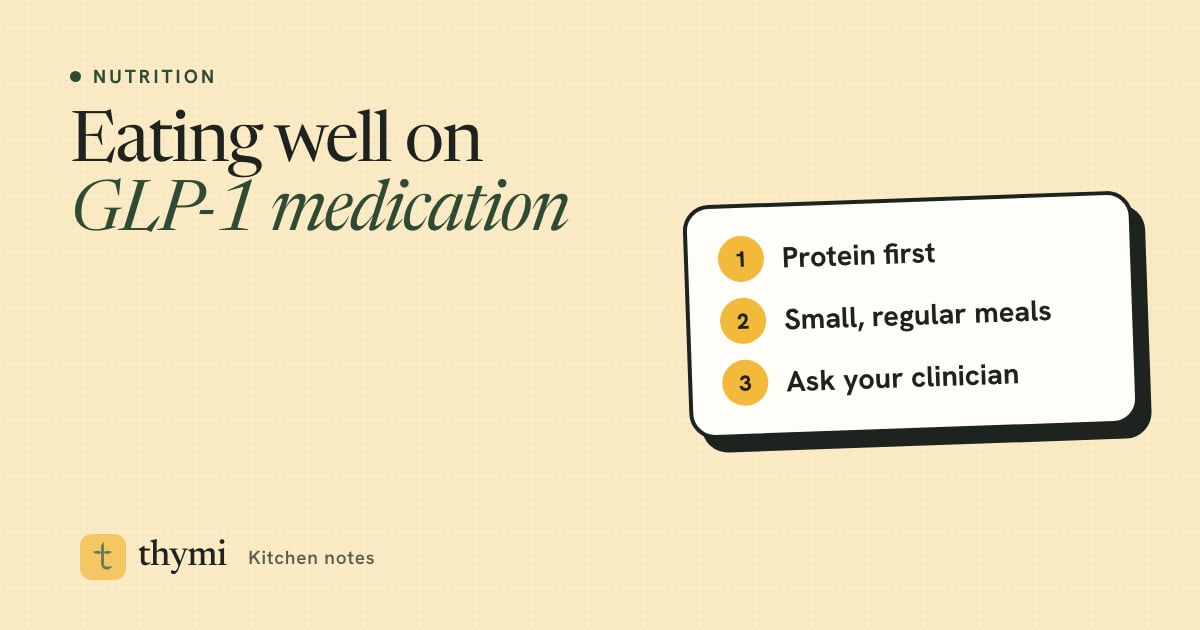
On GLP-1 medication, most people eat less because their appetite drops, so the focus shifts to making smaller meals count: prioritise protein at each meal, include vegetables and fibre gradually, stay well hydrated and go easy on very large or greasy meals. Your prescribing clinician should guide your targets and any symptoms, and tracking can help you check you're not eating too little.
Please note: This article is general information about food and nutrition, not medical advice. It doesn't cover medication doses, side-effect management or individual targets. Your prescribing clinician is the right person for any questions about your medicine, your health or symptoms you're experiencing.
How GLP-1 medicines change the way you eat
GLP-1 receptor agonists are prescription medicines that act on the same pathways as GLP-1, a hormone your gut releases after eating. Semaglutide is one example. Tirzepatide works on the GLP-1 receptor and also on a second hormone receptor, GIP. People often search for these by brand name, which is why you'll see phrases like "Ozempic diet", "Wegovy diet" or "Mounjaro diet". This article is about food in general and doesn't favour or compare any particular product.
For many people, the most noticeable effect is on appetite. These medicines can reduce hunger, make you feel full sooner and slow how quickly food leaves your stomach. Portions that used to feel normal may suddenly feel like too much, and some people find they think about food far less.
That change can be welcome, but it shifts the challenge. Instead of trying to eat less, the question becomes how to make a smaller amount of food cover everything your body needs.
Why nutrient quality matters more when you eat less
When your total intake drops a lot, every meal carries more weight. If a large share of a small day goes to foods with little protein, fibre, vitamins or minerals, it's easy to fall short without realising.
A useful way to think about it is "small but complete". Each meal ideally includes:
- A protein source, such as eggs, yogurt, fish, chicken, tofu, beans or lentils.
- Vegetables or fruit, for fibre, vitamins and minerals.
- Some whole grains or starchy foods, in a portion that suits your appetite.
- A modest amount of healthy fat, such as olive oil, nuts or avocado.
You don't need a perfect plate every time. Aim for most meals to tick most boxes, and keep treats and drinks in the mix without letting them crowd out the basics on days when your appetite is very low.
Good to know: If you have other health conditions, such as diabetes or kidney disease, your nutrition needs may be different. Your clinician or a registered dietitian can tailor advice to you.
Prioritise protein at every meal
Protein comes up again and again in conversations about eating on GLP-1 medicines, for good reason. When you lose weight, some of what you lose can be muscle as well as fat. Getting enough protein, alongside strength training, helps your body hold on to muscle. Protein is also filling, so it suits a smaller appetite well.
Practical ways to make protein a habit:
- Eat the protein part of your meal first, while your appetite is strongest.
- Spread it across the day rather than relying on one large protein-heavy dinner, which may be hard to finish.
- Keep easy options on hand, like yogurt, eggs, cottage cheese, tinned fish, tofu or ready-cooked lentils.
- Choose softer, simpler textures on days when heavier meals don't appeal, such as soups with beans or lentils, eggs or yogurt.
Approximate protein in some everyday foods:
| Food | Portion | Approx. protein |
|---|---|---|
| Egg | 1 large | ≈ 6 g |
| Chicken breast, cooked | 100 g (3.5 oz) | ≈ 30 g |
| Salmon, cooked | 100 g (3.5 oz) | ≈ 22–25 g |
| Plain Greek yogurt | 170 g (6 oz) | ≈ 15–18 g |
| Cottage cheese | ½ cup (≈ 113 g / 4 oz) | ≈ 11–14 g |
| Lentils, cooked | 1 cup (≈ 200 g / 7 oz) | ≈ 18 g |
| Firm tofu | 100 g (3.5 oz) | ≈ 10–17 g |
| Milk | 1 cup (240 ml / 8 fl oz) | ≈ 8 g |
Values vary by brand and preparation, so check labels where you can. How much protein you need depends on your body, activity and health, and your clinician may give you a specific target. Our guide to how much protein you need a day explains the general ranges people use.
Smaller meals, eaten slowly
Because these medicines can make you feel full quickly, many people find smaller, more frequent meals easier than three large ones. Some common practical tips:
- Use a smaller plate or bowl so a reasonable portion doesn't look overwhelming.
- Eat slowly and pause partway through. Fullness signals can arrive quickly, and it's easier to stop at "comfortably satisfied" than to recover from overeating.
- Stop when you feel full, even if there is food left. You can save it for later.
- Go easy on very greasy, fried or very large meals. Some people find these harder to tolerate on GLP-1 medicines.
- Notice your own patterns. If particular foods or meal sizes leave you uncomfortable, note them and tell your clinician.
What a day of smaller meals might look like
This is just an illustration of the "small but complete" idea, not a meal plan. Portions should match your appetite and any guidance from your clinician.
- Breakfast: plain Greek yogurt with berries and a spoonful of oats.
- Mid-morning: a boiled egg and a piece of fruit.
- Lunch: lentil and vegetable soup with a slice of whole-grain bread.
- Afternoon: a glass of milk or a soy drink, or a small handful of nuts.
- Dinner: a palm-sized piece of fish or tofu, cooked vegetables and a small portion of rice or potatoes.
Each eating occasion includes some protein, and fibre comes from several sources across the day rather than one large serving.
Digestive side effects such as nausea, constipation or diarrhoea are commonly reported with these medicines. Food changes may help some people feel more comfortable, but they are not a substitute for medical advice. If symptoms are troublesome or don't settle, speak to your prescribing clinician.
Stay hydrated
Food provides a surprising amount of your daily water. When you eat much less, you also take in less fluid from food, and a reduced appetite can blunt thirst for some people too.
- Keep water within reach and sip regularly through the day, rather than drinking a lot at once.
- Water-rich foods like soups, yogurt, fruit and vegetables count towards your fluids.
- Pay attention to warning signs of dehydration such as dark urine, dizziness or feeling unusually tired, especially if you've had vomiting or diarrhoea, and contact your clinician if they appear.
Tip: Pair a glass of water with something you already do, such as each meal or each time you take a break. Tracking water in an app can also show you at a glance whether you're keeping up.
Fibre and vegetables, added gradually
Fibre supports digestion and regularity, and it comes packaged with foods that are good for you anyway: vegetables, fruit, beans, lentils, oats and whole grains. When you're eating less, it's easy for fibre intake to drop.
The key word is gradually. A sudden large increase in fibre can cause bloating and wind, which is the last thing anyone wants when they're already adjusting to a new medicine. Add a little at a time, and drink enough fluid alongside it.
- Add a portion of vegetables to one meal a day, then build from there.
- Swap some refined grains for whole-grain versions.
- Include beans or lentils, which provide both fibre and protein.
For more detail, our guide to how much fiber you need per day covers targets and easy ways to reach them. If constipation is a problem, ask your clinician what's appropriate for you.
Strength training to help preserve muscle
Nutrition is only half of the muscle story. Strength training (also called resistance training) gives your muscles a reason to stay. Combined with enough protein, it's one of the most practical things you can do to protect muscle while your weight changes.
- Start with what's manageable: bodyweight exercises, resistance bands or light weights.
- Aim to work the major muscle groups, such as legs, back, chest and arms, across the week.
- Progress slowly, adding repetitions or weight over time.
- Make sure you've eaten enough to have energy for the session, especially if your appetite is very low.
If you're new to exercise, have a health condition or aren't sure what's safe for you, check with your clinician first. A qualified trainer or physiotherapist can help you get started with good technique.
Tracking to make sure you're eating enough
Most calorie tracking advice is about not eating too much. On a GLP-1 medicine, tracking can be just as useful for the opposite reason: making sure your intake, and especially your protein, isn't falling too low. When your appetite is suppressed, it's easy to have a day of coffee, a few bites and a small dinner without noticing how little that adds up to.
Tracking for a few weeks can help you:
- See how much protein you're actually getting, meal by meal.
- Spot days when total intake is very low, so you can raise it with your clinician.
- Notice which foods sit well and which don't.
- Bring real information to appointments instead of guessing.
If you're new to logging, our beginner's guide to counting calories covers the basics. In Thymi, you can choose a GLP-1 support goal, which sets a higher protein target as part of your daily calorie and macro targets. You can adjust those targets, and if your clinician has given you specific numbers, theirs are the ones to follow.
When to contact your clinician: Get in touch with your prescribing clinician, or seek urgent care if it's severe, if you have ongoing vomiting, can't keep fluids down, have severe or persistent stomach pain, show signs of dehydration, or are struggling to eat much at all. They are also the right person for any questions about your dose, side effects or targets.
Frequently asked questions
What should I eat on GLP-1 medication?
Many people find it helps to build smaller meals around a protein source, such as eggs, yogurt, fish, chicken, tofu, beans or lentils, with vegetables, some whole grains and a little healthy fat. Eating slowly, staying hydrated and going easy on very greasy or large meals are common practical tips. Your prescribing clinician can give advice specific to you.
How much protein should I eat on Ozempic, Wegovy or Mounjaro?
Protein needs depend on your body, activity level and health, so there is no single number that suits everyone. Your prescribing clinician or a registered dietitian is the best person to set a target for you. In general, including a protein source at each meal makes it easier to get enough when your appetite is low.
What foods should I avoid on GLP-1 medication?
No food is strictly off-limits in general guidance, but some people find very greasy, fried or very large meals harder to tolerate, and sugary drinks or alcohol can crowd out more nourishing foods. If certain foods consistently make you uncomfortable, note them and discuss them with your clinician.
Is it bad to eat too little on GLP-1 medication?
Eating very little for long periods can make it hard to get enough protein, fibre, vitamins and minerals, and may contribute to muscle loss. Tracking your intake for a while can show whether you are eating enough. If you are struggling to eat much at all, talk to your prescribing clinician.
Should I do strength training while taking a GLP-1 medicine?
Strength training, combined with enough protein, helps preserve muscle while your weight changes. Start with manageable exercises and progress gradually, and check with your clinician first if you are new to exercise or have a health condition.
This article is general information for healthy adults, not medical or nutritional advice. Talk to a doctor or registered dietitian before changing how you eat, especially if you are pregnant or breastfeeding, have or have had an eating disorder, have a medical condition, or take medication.