Nutrition
How Much Water Should I Drink a Day?
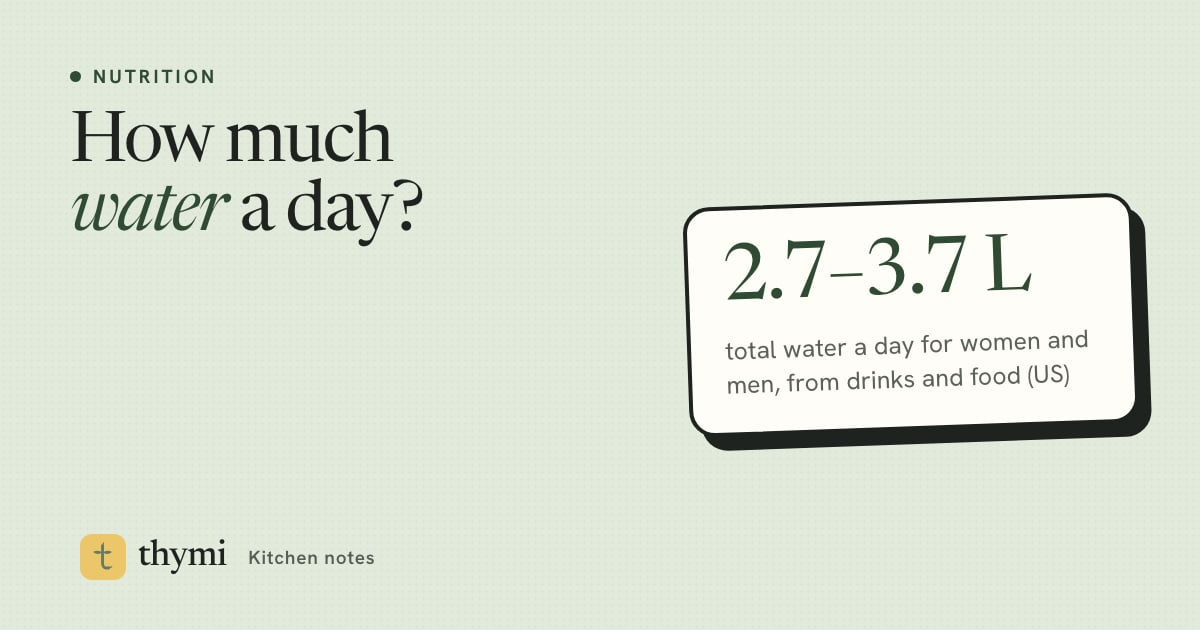
The US National Academies set an adequate intake for total water of about 2.7 liters (91 oz) a day for women and 3.7 liters (125 oz) for men, from all drinks and food combined. Roughly 20% usually comes from food, which leaves about 2.2 L (9 cups) of drinks for women and 3 L (13 cups) for men. Heat, exercise, pregnancy and breastfeeding raise your needs, and pale straw-colored urine is a simple sign you are drinking enough.
Daily water intake: the guidelines
The most widely used figures come from the US National Academies of Sciences, Engineering, and Medicine. They are adequate intakes for total water, meaning water from plain water, every other drink and the water inside food.
| Group (adults) | Total water a day | From drinks (approx.) |
|---|---|---|
| Women | ≈ 2.7 L (91 oz) | ≈ 2.2 L (9 cups) |
| Men | ≈ 3.7 L (125 oz) | ≈ 3.0 L (13 cups) |
| Pregnancy | ≈ 3.0 L (101 oz) | ≈ 2.3 L (10 cups) |
| Breastfeeding | ≈ 3.8 L (128 oz) | ≈ 3.1 L (13 cups) |
An adequate intake is not a strict minimum. It reflects what healthy people typically consume, and many people stay well hydrated with somewhat less, especially in cool weather and with little activity. Think of these figures as a reasonable everyday reference rather than a quota you must hit.
What about “8 glasses a day”? Eight 8 oz glasses is about 1.9 L. It is not an official guideline, but as a rough target for drinks it is a fine starting point for many people, and lower than the beverage figures above.
Water from food counts too
On a typical diet, around 20% of total water comes from food. Fruit, vegetables, soups, dal, curries, yogurt, milk-based dishes and cooked grains all contain a lot of water.
| Food | Water content (approx.) |
|---|---|
| Cucumber | ≈ 95% |
| Lettuce | ≈ 95% |
| Watermelon | ≈ 91% |
| Milk | ≈ 88% |
| Orange | ≈ 87% |
| Apple | ≈ 86% |
| White rice, cooked | ≈ 68% |
Many everyday dishes are mostly water too: a bowl of dal, rasam or sambar, a glass of buttermilk, a bowl of yogurt, a vegetable curry or a bowl of soup all add meaningful fluid. Coconut water and milk are drinks, so count them with your beverages.
If you eat plenty of fruit, vegetables and soups, you get more water from food and may need slightly less from drinks. If your diet is mostly dry foods like bread, crackers and snacks, drinks have to do more of the work.
Do tea, coffee and milk count?
Yes. Almost every drink contributes to your daily water intake:
- Tea and coffee. Caffeine has a mild diuretic effect, but in usual amounts, caffeinated drinks still add to your total fluid. The FDA notes that up to about 400 mg of caffeine a day (roughly four or five cups of brewed coffee) is not generally linked with negative effects for healthy adults. Less is advised in pregnancy, so check with your doctor.
- Milk and plant milks. These count, and they bring protein, calcium or both.
- Soft drinks and juice. These count as fluid, but they also add sugar and calories, so they are better as occasional drinks.
- Alcohol. Alcohol increases urine output, so it is not a good way to hydrate. Alternating alcoholic drinks with water helps. For the calorie side, see calories in alcohol.
Tip: Plain water is the simplest choice because it has no calories, sugar or caffeine. If plain water feels boring, add lemon, cucumber, mint or a splash of juice, or try sparkling water.
When you need more water
Your needs change from day to day. You will usually need more fluid when:
- It is hot or humid. You sweat more, even when sitting still.
- You exercise. Sweat losses vary a lot between people and conditions. A practical check for longer or harder sessions is to weigh yourself before and after: each kilogram (about 2 lb) lost is roughly a liter of fluid. Drink regularly afterward, and for long, sweaty sessions consider something with electrolytes.
- You are at high altitude. Breathing faster in thin, dry air increases water loss.
- You are ill. Fever, vomiting and diarrhea all increase fluid losses. Oral rehydration solutions replace salts as well as water. Seek medical advice if you cannot keep fluids down.
- You are pregnant or breastfeeding. See the higher figures in the table above, and follow your midwife’s or doctor’s advice.
Here is a worked example. Say you weigh 70 kg (154 lb) before an hour-long run on a warm day and 69.2 kg (152.5 lb) afterward, having drunk nothing. You lost about 0.8 kg, so roughly 0.8 liters of fluid. Drinking that back gradually over the next few hours, along with a normal meal that contains some salt, is a sensible way to recover. If you regularly lose more than this, plan to drink during the session too.
Older adults may feel less thirsty even when they need fluid, so regular drinks through the day matter more with age.
Urine color and signs of dehydration
For most healthy people, thirst is a reliable guide, and urine color is a useful daily check. Pale straw or light yellow usually means you are well hydrated. Dark yellow or amber suggests you need to drink more. Completely clear urine all day may mean you are drinking more than you need.
Some vitamins (especially B vitamins), foods such as beetroot, and certain medications can change urine color, so use it alongside how you feel.
Common signs of mild dehydration include:
- Feeling thirsty
- Dark yellow, strong-smelling urine
- Peeing less often than usual
- Dry mouth, lips or eyes
- Headache, tiredness or feeling lightheaded
Good to know: Confusion, fainting, a rapid heartbeat, or not passing urine for many hours can be signs of serious dehydration and need urgent medical attention. Babies, young children and older adults can become dehydrated more quickly.
Water myths worth dropping
A lot of hydration advice is repeated so often that it sounds like fact. A few common ones:
- “Everyone needs exactly 8 glasses.” Needs vary with body size, activity, climate and diet, and food provides part of your water. Eight glasses is a rough reference, not a rule.
- “Coffee and tea don’t count.” They do. Their mild diuretic effect does not cancel out the fluid they provide at usual intakes.
- “Clear urine is the goal.” Pale straw is enough. Urine that is completely clear all day usually means you are drinking more than you need, which is unnecessary rather than helpful.
- “If you feel thirsty, you are already badly dehydrated.” Thirst is an early, normal signal to drink, not an emergency. For most healthy adults, responding to thirst works well, with extra attention in heat, during exercise and in older age.
- “Extra water flushes out toxins or burns fat.” Your kidneys and liver handle waste whether you drink 2 liters or 4. Drinking beyond your needs mostly means more trips to the bathroom.
Water and weight loss: what it can and cannot do
Water has no calories, and it does not burn fat or speed up weight loss on its own. It can still help in a few practical ways:
- Swapping drinks. Replacing a daily sugary drink with water removes those calories entirely. A 12 oz (355 ml) can of regular cola is about 150 kcal, so one swap a day adds up to about 1,050 kcal a week.
- Feeling satisfied. Some people find a glass of water before or with a meal helps them eat more slowly and notice when they are full. Water-rich foods like soups, salads and fruit add volume for few calories. See foods that keep you full for ideas.
- Telling thirst from hunger. If you feel peckish soon after eating, a drink is an easy first check.
Water also explains a lot of scale noise. Salty meals, more carbs, hormonal changes and hard workouts all cause temporary water retention, which can hide fat loss for days. Our guide to daily weight fluctuations explains why, and why a trend line is more useful than a single weigh-in.
Can you drink too much water?
Yes, although it is rare in healthy adults. Drinking very large amounts in a short time can dilute the sodium in your blood, a condition called hyponatremia. It has been seen in situations such as endurance events where people drink far beyond thirst, and in water-drinking challenges. Symptoms can include nausea, headache, confusion and, in severe cases, seizures, and it needs urgent care.
For everyday life, spreading drinks through the day and drinking to thirst keeps you well clear of this. There is no benefit in forcing down extra liters beyond what you need.
Good to know: Some medical conditions, including heart failure, kidney disease and liver disease, and some medications, change how much fluid is safe for you. If you have been given a fluid limit, follow your doctor’s advice rather than general guidelines.
Easy ways to drink enough water
Most people do not need a strict plan, just a few habits that make drinking automatic:
- Anchor drinks to routines. A glass when you wake up, one with each meal and one when you get home covers a good share of the day.
- Keep a bottle in sight. On your desk, in your bag or in the car.
- Drink around activity. Before, during and after exercise, and more on hot days.
- Eat water-rich foods. Fruit, vegetables, dal, soups and yogurt all help.
- Make it taste good. Cold water, sparkling water, herbal tea, or water with sliced fruit or mint are easier to reach for than lukewarm tap water.
- Use urine color as feedback. If it is dark by mid-afternoon, add a glass or two earlier in the day rather than catching up at night, which can disturb sleep.
Here is how an ordinary day can reach about 2.2 liters of drinks without much thought:
| Drink | Amount |
|---|---|
| Glass of water on waking | 250 ml |
| Morning tea or coffee (2 cups) | 400 ml |
| Water with lunch | 300 ml |
| Afternoon water bottle | 500 ml |
| Glass of milk or buttermilk | 250 ml |
| Water with dinner and in the evening | 500 ml |
| Total from drinks | 2,200 ml (≈ 74 oz) |
If you want a simple way to keep count, Thymi includes water tracking with a daily water target and quick-add glasses, alongside your food log, so you can see your progress through the day instead of guessing.
Frequently asked questions
How much water should I drink a day?
The US National Academies suggest an adequate intake of about 2.7 liters of total water a day for women and 3.7 liters for men, from drinks and food combined. Since about 20% usually comes from food, that is roughly 2.2 liters (9 cups) of drinks for women and 3 liters (13 cups) for men. Needs are higher in heat, with exercise, and during pregnancy and breastfeeding.
Do tea and coffee count toward water intake?
Yes. Caffeine has a mild diuretic effect, but in usual amounts tea and coffee still add to your total fluid intake. Milk, plant milks and most other drinks count too. Alcohol is the exception, as it increases urine output.
Is 2 liters of water a day enough?
For many adults, around 2 liters of drinks plus the water in food is enough on a normal day. You may need more in hot weather, when exercising, when ill, or if you are pregnant or breastfeeding. Pale straw-colored urine and not feeling thirsty are good signs you are drinking enough.
Does drinking water help you lose weight?
Water has no calories and does not burn fat by itself. It can help indirectly by replacing sugary drinks, and some people find a glass with meals helps them eat more slowly and feel satisfied. Weight loss still depends on your overall calorie balance.
What are the first signs of dehydration?
Common early signs are thirst, dark yellow urine, peeing less often, a dry mouth, headache and tiredness. Confusion, fainting, a rapid heartbeat or not passing urine for many hours can mean serious dehydration and need urgent medical attention.
Can you drink too much water?
Yes, but it is rare in healthy adults. Drinking very large amounts in a short time can dilute the sodium in your blood, called hyponatremia. Drinking to thirst and spreading drinks across the day avoids this. People with heart, kidney or liver conditions should follow their doctor’s fluid advice.
This article is general information for healthy adults, not medical or nutritional advice. Talk to a doctor or registered dietitian before changing how you eat, especially if you are pregnant or breastfeeding, have or have had an eating disorder, have a medical condition, or take medication.