Habits
Meal Prep for Weight Loss: A Simple Weekly System That Sticks
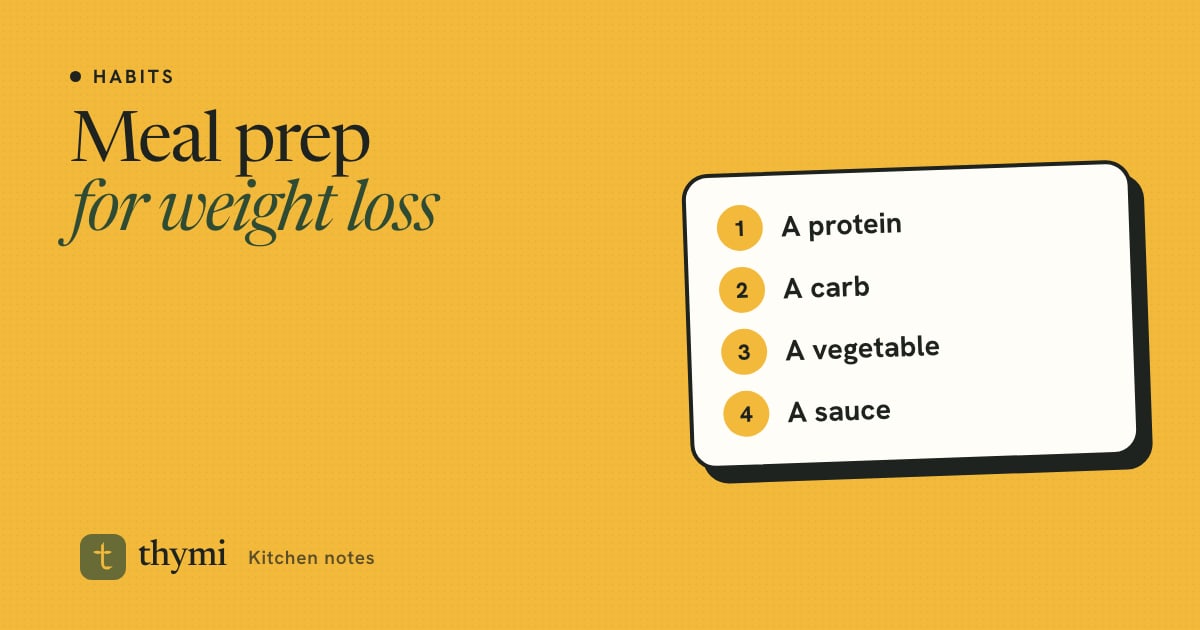
Meal prep for weight loss works by deciding your portions once, on a calm afternoon, instead of at 8 pm when you are tired and hungry. The simplest system is to cook a few components in batches each week (a protein, a carb, vegetables and a sauce), portion them into containers that fit your calorie target, and log each meal once. Keep cooked food in the fridge for about 3 to 4 days and freeze anything beyond that.
Why meal prep helps with weight loss
Meal prep is not a diet. It is a way of making the choices you have already decided on easier to follow. It helps for a few practical reasons:
- Fewer decisions when you are hungry. When lunch is already in the fridge, you are less likely to grab whatever is closest.
- Portions are set in advance. You decide how much rice or oil goes into each meal once, with a clear head.
- Tracking becomes almost effortless. Weigh or measure the batch once, and every portion has the same numbers.
- It saves time and money. One cooking session replaces several, and planned shopping means less waste.
You do not need to prep every meal. Many people find that prepping just lunches, or just lunches and a few dinners, makes the biggest difference for the least effort.
A step-by-step weekly meal prep system
- Know your target. Decide roughly how many calories and how much protein you are aiming for each day. If you have not worked this out, start with how many calories you should eat a day. Then decide how much of that budget each prepped meal should use, for example 450 to 550 kcal per lunch.
- Choose what to prep. Pick the meals that go wrong most often. For many people that is weekday lunches.
- Plan two or three recipes, not seven. Choose one or two proteins, one or two carbs, two or three vegetables and two sauces. Mixing them gives variety without extra cooking.
- Write a shopping list from the plan, and check what you already have.
- Batch cook in one session. Put the oven, a pot and a pan to work at the same time. Most sessions take 60 to 90 minutes.
- Weigh, portion and label. Divide each component evenly between containers, label them with the day, and cool and refrigerate them promptly.
- Log once. Enter one container as a saved meal in your tracker, so the rest of the week is a single tap.
- Review on the weekend. Which meals did you enjoy? Which did you skip? Adjust next week's plan.
Tip: plan to cook twice a week, for example Sunday and Wednesday. That keeps everything within the 3 to 4 day fridge window and means the second half of the week tastes fresh too.
The meal prep template: protein + carb + veg + sauce
Almost every good prep container follows the same pattern. Fill in each slot and you have a balanced, filling meal with predictable calories.
| Slot | Examples | Typical portion | Approx. kcal |
|---|---|---|---|
| Protein | Chicken breast, fish, eggs, tofu, paneer, lentils, chickpeas | e.g. 120 g (4.2 oz) cooked chicken breast | ≈ 200 |
| Carb | Rice, potatoes, roti, quinoa, pasta, whole-grain bread | e.g. 150 g (5.3 oz) cooked white rice | ≈ 195 |
| Vegetables | Broccoli, peppers, carrots, green beans, spinach, cauliflower | A large handful or two, 150 g (5.3 oz) or more | ≈ 30–70 |
| Fat or sauce | Oil for cooking, yogurt sauce, salsa, curry base, pesto | e.g. 1 tsp oil (≈ 40) plus 2 tbsp yogurt sauce | ≈ 60–120 |
| Total | One balanced container | ≈ 485–585 | |
This is a starting point, not a rule. If your daily target is lower, trim the carb or the fat slot first. If you are hungrier or more active, add more vegetables, a little more carb or a piece of fruit on the side. Keep the protein portion generous either way, as protein helps you feel full and protects muscle while you are eating less.
Batch-cooking components that keep well
Proteins
- Chicken breast or thighs: season and roast on a tray, then slice. Thighs stay juicier but contain more fat.
- Hard-boiled eggs: boil a batch for breakfasts and snacks.
- Lentils, chickpeas and beans: cook dry pulses in a pot or pressure cooker, or rinse canned ones.
- Tofu or paneer: press, cube and bake or pan-fry with spices.
- Mince-based dishes such as chili or keema: cook a large pot and portion it.
Carbs
- Rice: cook a big pot, then cool it quickly (spread it on a tray) and refrigerate it within an hour or two. See calories in rice for portion numbers.
- Potatoes or sweet potatoes: roast wedges or boil and cube them.
- Quinoa, bulgur, couscous or pasta all reheat well.
Vegetables
- Roasted trays of peppers, onions, broccoli, cauliflower, carrots and zucchini.
- Raw, chopped vegetables such as cucumber, carrot and peppers for crunch; store them separately so they stay crisp.
- Frozen vegetables are perfectly good and can be cooked straight into a container.
Sauces
Sauces stop prep from feeling repetitive. Try a garlic yogurt sauce, a tomato salsa, a peanut-lime dressing, a green chutney or a simple curry base. Keep them in small separate pots so meals do not go soggy, and count the oil or nut butter in them.
Portioning and logging once
This is where meal prep becomes a weight-loss tool rather than just a time saver.
- Weigh the raw ingredients for the whole batch, or use the package labels. Our guide to how to read a nutrition label helps here.
- Add up the whole batch. For example, a pot of chili might total about 2,400 kcal.
- Divide by the number of portions. Split evenly into six containers and each is about 400 kcal. If you prefer, weigh the cooked batch and divide by weight so you can take different amounts later.
- Save it as a meal in your tracker. Each day, add it with one tap instead of re-entering everything.
If you do not have a food scale, use consistent containers and measuring cups, and estimate visually. Our guide to estimating portion sizes without a scale covers practical shortcuts.
Worked example
A chicken and rice bowl container: 120 g (4.2 oz) cooked chicken breast (≈ 200 kcal, about 37 g protein), 150 g (5.3 oz) cooked white rice (≈ 195 kcal), 150 g (5.3 oz) roasted vegetables (≈ 50 kcal) cooked with 1 tsp olive oil (≈ 40 kcal), plus 2 tbsp garlic yogurt sauce (≈ 25 kcal). Total: roughly 510 kcal and 40 g of protein. Log it once, and the next four lunches are already known.
Food safety basics for meal prep
Prepping food in advance means storing it for longer, so a few basics, in line with mainstream USDA guidance, matter:
- Refrigerate within 2 hours of cooking, or within 1 hour if it is very hot (above 90°F / 32°C). Divide large batches into shallow containers so they cool quickly.
- Eat within about 3 to 4 days. Most cooked leftovers keep about 3 to 4 days in a fridge at 40°F (4°C) or below.
- Freeze for longer. Anything you will not eat in that window should go straight into the freezer. Frozen food stays safe, though quality is best within a few months.
- Thaw safely, in the fridge overnight or in the microwave, not on the counter.
- Reheat thoroughly until steaming hot throughout, to 165°F (74°C). Stir halfway through microwaving to avoid cold spots.
- Take extra care with rice: cool it quickly, keep it in the fridge and reheat it only once.
- When in doubt, throw it out. Smell and appearance are not reliable signs that food is safe.
Good to know: if you are pregnant, older, or have a weakened immune system, food safety matters even more. Follow your doctor's or national health service's advice on which foods to avoid and how to store them.
5 example meal prep menus
Each of these makes four to five lunches or dinners. Calories depend on your portions, so weigh and log your own batch.
1. Classic chicken bowls
Roasted chicken breast with paprika and garlic, rice or roasted potatoes, roasted broccoli and peppers, and a garlic yogurt sauce. Simple, high in protein and easy to scale.
2. Vegetarian lentil and roasted vegetable bowls
Cooked green or brown lentils with lemon and herbs, roasted sweet potato, cauliflower and red onion, baby spinach, a little feta and a tahini-lemon dressing on the side. For more ideas on getting enough protein without meat, see vegetarian protein sources.
3. Indian chicken curry with rice and sabzi
A tomato-onion chicken curry made with a measured amount of oil, plain basmati rice, a dry cabbage or green bean sabzi, and a pot of cucumber raita. The curry freezes well, so make a double batch.
4. Indian vegetarian: rajma or chana with roti
A big pot of rajma (kidney beans) or chana masala, two whole wheat rotis per portion (or brown rice), a dry vegetable sabzi such as bhindi or lauki, and plain dahi. Add paneer or tofu bhurji to some containers for extra protein.
5. Breakfast and snack prep
Egg muffins baked with spinach, peppers and onion; overnight oats made with milk or yogurt, chia seeds and fruit; and boxes of chopped vegetables with hummus. Breakfasts are often the meal that gets skipped or grabbed, so this prep pays off quickly.
Making meal prep stick
- Start small. Prep three lunches the first week, not 21 meals.
- Use sauces and spices for variety. The same chicken tastes very different with salsa, peanut sauce or curry.
- Keep a backup. A few freezer portions rescue the week when plans change.
- Leave room for life. Prepped meals do not mean you can never eat out. Plan them into your week rather than feeling guilty about them.
- Invest in containers you like, ideally in a consistent size so portions stay consistent too.
If you use Thymi, saving each prepped container as a meal is the step that makes the whole system pay off: the work of logging happens once on Sunday, and every weekday after that takes seconds.
Frequently asked questions
Is meal prep good for weight loss?
It can be very helpful. Meal prep sets your portions in advance, reduces impulse choices when you are hungry, and makes tracking simple because each portion has the same numbers. It does not cause weight loss by itself, but it makes a consistent calorie deficit much easier to keep.
How long does meal prep last in the fridge?
Most cooked leftovers keep about 3 to 4 days in a fridge at 40°F (4°C) or below, in line with USDA guidance. Refrigerate food within 2 hours of cooking, and freeze anything you will not eat within that window. Reheat until steaming hot throughout.
How do I meal prep for the whole week?
Plan two or three recipes, shop once, then batch cook proteins, carbs, vegetables and sauces in one session. Portion them into containers, refrigerate what you will eat in the next 3 to 4 days and freeze the rest, or simply cook twice a week, for example on Sunday and Wednesday.
How many calories should a meal prep meal be?
It depends on your daily target and how many meals you eat. As an example, someone aiming for 1,800 calories a day across three meals and a snack might plan prepped meals of around 450 to 550 calories each. Build each container around a good portion of protein and plenty of vegetables.
What are good meal prep ideas for beginners?
Start with simple bowls: a roasted protein such as chicken, tofu or paneer, a carb like rice or potatoes, a tray of roasted vegetables and a sauce. Chili, dal, rajma and chana also batch cook well. Prep just three or four lunches in your first week and build from there.
This article is general information for healthy adults, not medical or nutritional advice. Talk to a doctor or registered dietitian before changing how you eat, especially if you are pregnant or breastfeeding, have or have had an eating disorder, have a medical condition, or take medication.