Macros
How Many Carbs Per Day Should You Eat?
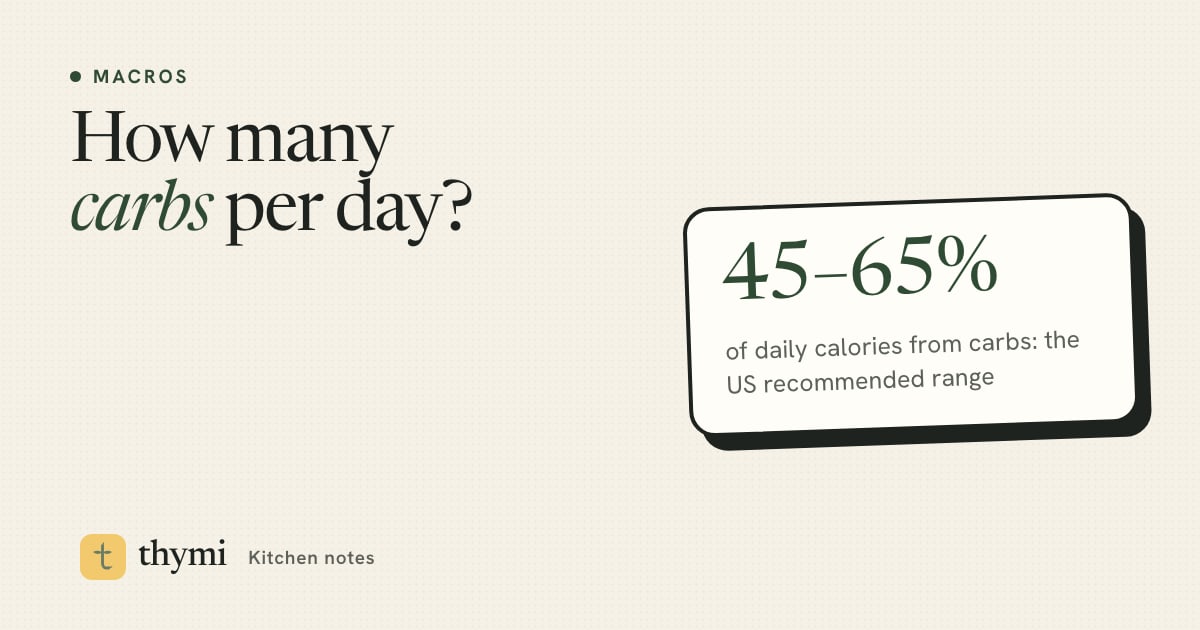
Most adults do well getting 45–65% of their calories from carbohydrates, which works out to about 225–325 g a day on a 2,000-calorie diet. The US RDA of 130 g a day covers the brain’s typical glucose needs and is best seen as a floor, not a target. For weight loss, total calories matter more than whether your carbs are high or low, so choose an amount you can keep up and favor fiber-rich sources.
What carbs are and why you need them
Carbohydrates are one of the three macronutrients, alongside protein and fat. They come in three main forms:
- Sugars, found naturally in fruit and milk and added to many processed foods and drinks.
- Starches, found in grains, potatoes, corn, rice, bread, pasta, beans and lentils.
- Fiber, the part of plant foods your body does not fully digest. It supports digestion and helps meals feel more filling.
Digestible carbs provide about 4 calories per gram, the same as protein (fat provides about 9, alcohol about 7). Your body breaks them down to glucose, which fuels your brain and muscles. Some is stored as glycogen in the liver and muscles, where it is especially useful for harder exercise.
On a US nutrition label, “Total Carbohydrate” includes sugars, starches and fiber. Some people subtract fiber to get “net carbs”, but that term has no official definition, so this guide uses total carbohydrate throughout.
How many carbs per day: the guidelines
Two US figures from the National Academies frame most carb advice:
- Acceptable Macronutrient Distribution Range (AMDR): 45–65% of calories. This is a broad range linked with healthy eating patterns for adults, leaving room for many styles of eating.
- Recommended Dietary Allowance (RDA): 130 g a day for adults. This is based on the typical amount of glucose the brain uses. It is a minimum to cover that need, not an ideal intake, and most people eat well above it.
The RDA is higher during pregnancy (175 g a day) and breastfeeding (210 g a day), which is one reason very low-carb diets are not usually suggested at those times without medical guidance.
Good to know: Your body can make some glucose from protein and use ketones for fuel when carbs are very low, which is how ketogenic diets work. The 130 g RDA reflects typical needs on a normal diet, not the absolute minimum for survival, but it is a sensible floor for most people who are not following a medically supervised plan.
Carbs per day by calorie level
Because the AMDR is a percentage, your carb range depends on your calorie intake. Multiply your calories by 0.45 and 0.65, then divide each by 4 to get grams.
| Daily calories | 45% of calories | 50% (middle) | 65% of calories |
|---|---|---|---|
| 1,600 kcal | 720 kcal = 180 g | 800 kcal = 200 g | 1,040 kcal = 260 g |
| 2,000 kcal | 900 kcal = 225 g | 1,000 kcal = 250 g | 1,300 kcal = 325 g |
| 2,500 kcal | 1,125 kcal ≈ 281 g | 1,250 kcal ≈ 313 g | 1,625 kcal ≈ 406 g |
All three columns sit well above the 130 g floor. If you eat fewer calories, for example during a weight-loss phase, the grams shrink in proportion. Not sure what your calorie number should be? Start with how many calories you should eat a day.
Work out your own carb target in 3 steps
Most carb intake calculators use the same logic as counting macros: set protein and fat first, then give the remaining calories to carbs. You can do it on paper in a couple of minutes.
- Set your calories. Example: 1,800 kcal a day for gentle weight loss.
- Set protein by body weight. Example: 65 kg (143 lb) × 1.6 g = 104 g protein = 416 kcal.
- Set fat as a share of calories. Example: 30% of 1,800 = 540 kcal = 60 g fat.
Carbs get what is left: 1,800 − 416 − 540 = 844 kcal. Divide by 4 and you get about 211 g of carbs, or roughly 47% of calories, comfortably inside the AMDR.
| Macro | Grams | Calories | % of total |
|---|---|---|---|
| Protein | 104 g | 416 | ≈ 23% |
| Fat | 60 g | 540 | 30% |
| Carbohydrate | ≈ 211 g | 844 | ≈ 47% |
| Total | 1,800 | 100% |
If you prefer fewer carbs, raise fat to 35% (630 kcal, 70 g) and carbs fall to about 189 g. Both versions are reasonable. Our guide on how to count macros walks through the method in more detail, and how much protein you need a day helps you pick the protein figure.
Carbs for weight loss: low carb vs moderate carb
Weight loss depends on eating fewer calories than you burn over time. Both low-carb and moderate-carb diets can do that, and neither works if calories are not in a deficit. The best approach is the one you can follow consistently, with meals you enjoy and hunger you can manage.
What “low carb” means
Definitions vary. Low-carb diets often mean less than about 130 g a day. Ketogenic diets go much lower, typically around 20–50 g a day, to shift the body toward using ketones for fuel. A moderate approach sits within the 45–65% AMDR.
Why low carb often shows a fast early drop
Glycogen is stored with water. When you cut carbs sharply, glycogen stores fall and that water goes with them, so the scale can drop quickly in the first week or two. That early change is mostly water, not fat. It comes back when carbs return, which is normal and not a sign of failure. See why your weight fluctuates day to day for more.
Choosing an approach
- Low carb may suit you if you naturally prefer meat, fish, eggs, dairy, vegetables, nuts and oils, and find that fewer starches keep your appetite steady.
- Moderate carb may suit you if you love rice, roti, bread, pasta, fruit or oats, train hard, or find low-carb eating hard to sustain socially.
- A middle path works for many people: keep protein high, choose carb portions deliberately, and fill half the plate with vegetables.
Tip: Whatever approach you choose, give it two to three weeks and judge it by your weight trend, energy, hunger and how easy it feels, not by one weigh-in.
Carb quality: what to put on your plate
How many carbs you eat matters less, for most people, than where they come from. Carbs that bring fiber, vitamins and minerals with them tend to be more filling and support overall health. Good everyday sources include whole grains, legumes, fruit, vegetables, potatoes with skin, and plain dairy.
A useful fiber guideline is about 14 g per 1,000 calories, or about 28 g on a 2,000-calorie day. Choosing carbs with fiber is the easiest way to get there. More ideas are in our guide to how much fiber you need a day.
| Food (portion) | Carbs (approx.) | Fiber (approx.) |
|---|---|---|
| White rice, cooked (1 cup / ≈ 158 g) | ≈ 45 g | ≈ 0.6 g |
| Brown rice, cooked (1 cup) | ≈ 46 g | ≈ 3.5 g |
| Pasta, cooked (1 cup) | ≈ 43 g | ≈ 2.5 g |
| Rolled oats, dry (½ cup / 40 g) | ≈ 27 g | ≈ 4 g |
| Whole-wheat bread (1 slice) | ≈ 12–14 g | ≈ 2 g |
| Chapati or roti (1 medium, ≈ 40 g) | ≈ 15–20 g | ≈ 2–3 g |
| Lentils, cooked (1 cup) | ≈ 40 g | ≈ 15 g |
| Chickpeas, cooked (1 cup) | ≈ 45 g | ≈ 12 g |
| Potato, baked with skin (1 medium) | ≈ 37 g | ≈ 4 g |
| Banana (1 medium) | ≈ 27 g | ≈ 3 g |
| Apple (1 medium) | ≈ 25 g | ≈ 4 g |
| Milk (1 cup / 240 ml) | ≈ 12 g | 0 g |
Notice that lentils and white rice have similar carbs per cup, but lentils bring about 25 times the fiber and plenty of protein. Swapping half a portion of rice for dal, or white bread for whole-grain, is a small change that adds up.
Refined carbs such as white bread, pastries and sweets are not off limits. They are simply less filling per calorie, so it helps to pair them with protein and vegetables. Added sugars specifically are worth keeping below about 10% of calories.
Carb timing around training
For most people doing general fitness, total daily carbs matter far more than timing. If you train hard, for long periods, or more than once a day, timing becomes more useful:
- Before training (about 1–4 hours before): a meal with carbs and some protein, such as oats with milk and fruit, or rice with chicken or dal, helps you start with full energy stores. Closer to the session, a smaller, easily digested snack such as a banana works for many people.
- During long sessions: for endurance exercise lasting more than about an hour, many athletes use sports drinks, gels or simple snacks to keep going.
- After training: a meal with carbs and protein helps restock glycogen and supports muscle repair, which matters most if you train again within a day.
If you lift weights a few times a week and train in the evening, simply eating a normal dinner with a carb portion afterward is usually enough. Plan larger carb portions on harder training days and lighter ones on rest days if that suits you.
Carbs and diabetes: get individual advice
If you have type 1 or type 2 diabetes, prediabetes or gestational diabetes, the right amount and timing of carbs depends on your blood sugar targets, your medication and how your body responds. Many people with diabetes work with a doctor, diabetes educator or registered dietitian to plan consistent carb amounts at meals.
Good to know: Do not cut carbs sharply on your own if you take insulin or other glucose-lowering medication. Reducing carbs without adjusting medication can cause low blood sugar. Talk to your care team first.
How to track your carbs
Tracking carbs for a week or two is the quickest way to learn where your carbs come from and whether you are near your target. Use the Total Carbohydrate line on labels, check the serving size, and weigh or measure starchy foods like rice and pasta at first, since portions are easy to underestimate.
In Thymi, your carb target is set from your body, activity, goal and pace, and you can adjust it. Each meal you log, whether by photo, barcode, nutrition-label photo or a quick description like “dal, rice and one roti”, fills the carb and fiber gauges alongside calories, protein and fat. Over a couple of weeks you can see whether your carbs lean toward whole grains and legumes or mostly refined foods.
Frequently asked questions
How many carbs should I eat a day to lose weight?
There is no single number. Weight loss depends on a calorie deficit, and both moderate and low-carb diets can work. A common starting point is 45–50% of a reduced calorie target, for example about 180–200 g on 1,600 calories, then adjusting based on hunger, energy and your weight trend.
What is the minimum amount of carbs per day?
The US RDA for carbohydrate is 130 g a day for adults, based on the brain’s typical glucose needs. It is a floor for most people rather than a target. The RDA is higher during pregnancy (175 g) and breastfeeding (210 g).
How many carbs is considered low carb?
Definitions vary, but low-carb diets often mean less than about 130 g a day. Ketogenic diets are much lower, typically around 20–50 g a day. People with diabetes or other medical conditions should get individual advice before going low carb.
Is 100 grams of carbs a day low carb?
Yes. 100 g a day is below the 130 g RDA and would be considered low carb by most definitions. It can work for some people, but it is not necessary for weight loss, and anyone taking glucose-lowering medication should talk to their doctor first.
Should I count total carbs or net carbs?
Total carbohydrate is the figure on US nutrition labels and in most food databases, so it is the simplest to track. Net carbs, which subtract fiber, has no official definition. If you choose fiber-rich carbs, your total carbs will naturally include more fiber.
This article is general information for healthy adults, not medical or nutritional advice. Talk to a doctor or registered dietitian before changing how you eat, especially if you are pregnant or breastfeeding, have or have had an eating disorder, have a medical condition, or take medication.